
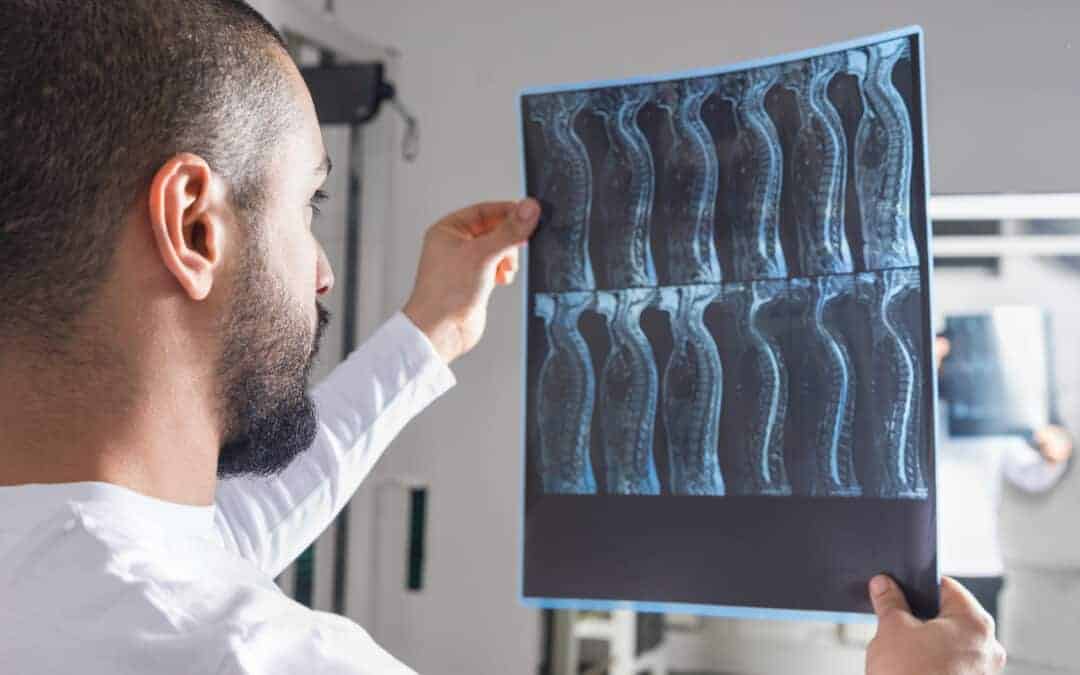
Spinal Cord Safety – In & Out of the Arena
Latest Posts
Spinal Cord Safety – In & Out of the Arena
Author: Troy Smith troyannasmith@gmail.com
A bond between a horse and their rider at times can be undeniable. Crowds from around the world will come to watch some of the most talented teams dance across the arena, soar over skyscrapers, and lunge through treacherous waters. The bravery that has been built can take years for such a duo to accomplish, and many times why the love for the sport runs so deep.
One of the most difficult facets involving equestrianism is the safety aspect. Falling off a horse can be extremely dangerous no matter what experience of riding you have. And though the information has always been available to riders throughout the years, until recently has there been a surge in awareness for further protection.
Beyond leisures, broken bones and the common concussion, more and more riders are finally picking up on the severity of what can happen aboard your mount and setting the example for the future of the sport. However, recent studies have found that spinal cord injuries occurring in horseback riders are vastly misunderstood.
In a study titled, “Traumatic Spinal Cord Injuries in Horseback Riding: A 35-Year Review,” Cindy Y. Lin, MD, Jerry Wright, MS, Tamara Bushnik, PhD, Kazuko Shem, MD “characterize the demographics, SCI patterns, and neurologic outcomes of riders with SCI’s related to horseback riding”.
The number of injuries for horseback riding were compared with other sports and activities. The results concluded, compared with diving, motorcycle riding, football, and gymnastics, horseback riding has an equal likelihood of resulting in paraplegia and tetraplegia. The most common levels of preserved neurologic function were C4-C6, T12, and L1. Spinal cord injury from horseback riding most commonly resulting in incomplete tetraplegia (41%) followed by complete paraplegia (24%). Only 4 patients required mechanical ventilation on discharge from acute inpatient rehabilitation.
After any fall in the arena requiring medical attention, both the USEF and FEI require registered sporting events to have an emergency preparedness plan. The FEI has a doctor’s pack available, which details guidelines on emergency medical personnel and injury response. FEI competitions are required to have personnel trained in emergency medical care over the duration of the competition, and a medical coverage plan that details procedures, ambulance coverage, and local hospitals with emergency trauma services. The FEI also requires that there is a dedicated medical provider, a quiet area onsite for evaluation of athletes with the Sport Concussion Assessment Tool, and a plan for acute stabilization of athletes with neurological injuries.
In the Department of Neurological Surgery out of The University of Miami School of Medicine, the research article “Pre-hospital Management of Spinal Cord Injuries” by Barth A. Green, M.D., Frank J. EislDont, M.D. and JalDes T. O’Heir discusses accident scene triage and the debate of care immediately after the accident.
“In most areas of the United States, paramedics are highly skilled in advanced life support techniques and are responsible for major trauma victims such as those with spinal cord injuries. These skills include the capability of intubation, defibrillation, intravenous medication administration, and very importantly in the case of spinal cord injury, neurological assessment.”
Additionally, after further assessment, there is much controversy regarding whether a SCI patient should be taken to the nearest less qualified hospital or transported (requiring a greater length of time), to a more highly specialized trauma center. These decisions left up to pre-hospital colleagues play an important role in the healthcare delivery system in determining the patient’s level of injury.
Those deeply rooted in the equestrian community unfortunately may not be informed down to the final statistic but are well aware of the dangers of their sport. You now will see many of our top riders sporting air vests when aboard their mounts. Leaders in this community are companies like HeLite, Free Jump and Horse Pilot. These air vests are designed for safety, comfort and discretion, but to protect the rider’s vital areas. Airvests will now cover the rider’s abdomen, neck and vertebrae, and will deploy when triggered during a crash or fall.
All of these decisions, evaluations, and research are major components in determining the most optimal outcome in any SCI. Spreading the awareness of riding safety, and encouraging the equestrian community to protect each other, is the only way to avoid becoming a part of a statistic. Taking safety seriously as an equestrian is not only the smarter choice, but the evolution to the sport. As riders adapt to the safety advancements, additional protection can only make you a better athlete. Staying safe and informed is the superpower to ride not only more confidently but to be an innovative addition to the equestrian future.