Heaven Sent By Troy Anna Smith

Heaven Sent By Troy Anna Smith

Heaven Sent By Troy Anna Smith

Author: Troy Anna Smith troyannasmith@gmail.com

An accomplished pianist, equestrian, and animal lover, Victoria McCullough is sure to make a lasting impression upon introduction. Her soft voice and Northern Californian upbringing proves she found her charm and character young. And you can’t help but smile when she calls you “darling.” The strong willed, chairman and owner of Chesapeake Petroleum in Gaithersburg, Maryland, and life saver of more than 10,000 horses from slaughter, Victoria also rubs elbows with President Joe Biden, Senator Steven Cohen of TN, and many more among Congress within the walls of DC. She has received the humanitarian award from the Pegasus Awards Dinner in January of 2018 during the US Equestrian Annual Meeting. Victoria resides in Wellington, FL but is well acquainted inside Washington DC. The woman outside of her achievements has a heart of gold.

Most recently, Victoria has had her hand in supporting the movement for spinal cord injury awareness. “We had to bring the attention to Congress, I am a major supporter of paralysis and blindness awareness, and these projects needed a platform,” Victoria shares. “What this does is it gives the fundraising and research that is long overdue and it opens the right opportunities for spinal cord injuries,” she says.  If you did not know already, September was National Spinal Cord Injury Awareness Month. During the month of September, scientists and researchers acknowledge the hundreds of thousands in the United States and millions worldwide living with a spinal cord injury. Our beloved Irish Olympian Kevin Babington who suffered from a near fatal SCI in 2019 was honored by Victoria multiple times via sponsorship through the Silver Oak Jumper Tournament and the Victoria McCullough & The Davis McCullough Foundation. Every effort and sponsorship put forth has been donated to Kevin’s recovery, research, and funding following his fall during competition at the Hampton Classic Horse Show in 2019. Victoria has wholeheartedly dedicated herself to educating others on the importance of SCI awareness, and the discovery of ending paralysis.

The Kevin Babington Foundation not only regularly keeps the SCI community up-to-date with Kevin’s progress, but relevant safety, news, and spinal research regarding breakthroughs and the latest information on equestrian safety. All of this is supported thanks to sponsors like Victoria, a major nod to the activist with muscle, and grace. “Friendship is why we are all here,” Victoria says. “Without the entire support of our community, and our friends, we wouldn’t be here, and that is what is so important, our friends.”

Latest Posts

NervGen Pharma a clinical stage biotech company

NervGen Pharma a clinical stage biotech company

Latest Posts

NervGen Pharma a clinical stage biotech company

Author: NervGen Pharma Corp

NERVGEN PHARMA PRESENTING AT THE 
H.C. WAINWRIGHT 23RD ANNUAL GLOBAL INVESTMENT CONFERENCE

Vancouver, Canada. September 12, 2021 – NervGen Pharma Corp. (TSX-V: NGEN) (OTCQX: NGENF) (“NervGen” or the “Company”), a clinical stage biotech company dedicated to developing innovative solutions for the treatment of nervous system damage, will be presenting at the H.C. Wainwright 23rd Annual Global Investment Conference, being held virtually on September 13-15, 2021.

The presentation will be available via webcast on demand starting on Monday, September 13, 2021, at 7:00 a.m. ET using the following link: https://journey.ct.events/view/042230bf-93b7-4555-984f-43a642d5735c.

Paul Brennan, NervGen’s President and CEO, will provide an overview of the Company’s operations and the development plans for its lead compound, NVG-291. A Phase 1 trial of NVG-291 in heathy subjects is ongoing and, upon completion of the multiple ascending dose portion of the trial, NervGen intends to initiate a Phase 1b trial in Alzheimer’s disease patients. Concurrently, the Company also plans to initiate Phase 2 trials in spinal cord injury and multiple sclerosis with each of these trials planned to start in 2022.

NVG-291 modulates protein tyrosine phosphatase (“PTPσ”), the key receptor for chondroitin sulfate proteoglycans (“CSPGs”). PTPσ and CSPGs have been shown to impede repair following injury to the nervous system, whether a result of trauma, such as in the case of spinal cord injury or traumatic brain injury, or disease-specific mechanisms, such as Alzheimer’s disease or multiple sclerosis. NVG-291 promotes neural repair mechanisms such as axonal regeneration; remyelination; plasticity; autophagy (a cellular self-cleaning mechanism that removes unnecessary or dysfunctional components); and a non-inflammatory phenotype in microglia cells, the innate immune cells of the central nervous system.

Company management will be available to participate in one-on-one meetings with investors who are registered to attend the conference.

About NervGen
NervGen is restoring life’s potential by creating innovative solutions for the treatment of nervous system injury due to trauma or disease as a result of underlying inflammation and/or neurodegeneration. The Company is initially developing drugs for the treatment of multiple sclerosis, spinal cord injury and Alzheimer’s disease.

For further information, please contact:

Huitt Tracey, Corporate Communications
htracey@nervgen.com
604.362.6209

Nancy Thompson, Vorticom Public Relations
nancyt@vorticom.com
212.532.2208

Follow NervGen on Twitter (@NervgenP), LinkedIn (NervGen Pharma Corp.), and Facebook (facebook.com/nervgen/) for the latest news on the Company.

Neither the TSX Venture Exchange nor its Regulation Services Provider (as that term is defined in the policies of the TSX Venture Exchange) accepts responsibility for the adequacy or accuracy of this release.

Cautionary Note Regarding Forward-Looking Statements
This news release may contain “forward-looking information” and “forward-looking statements” within the meaning of applicable Canadian and United States securities legislation. Such forward-looking statements and information herein include, but are not limited to, the Company’s current and future plans, expectations and intentions, results, levels of activity, performance, goals or achievements, or any other future events or developments constitute forward-looking statements, and the words “may”, “will”, “would”, “should”, “could”, “expect”, “plan”, “intend”, “trend”, “indication”, “anticipate”, “believe”, “estimate”, “predict”, “likely” or “potential”, or the negative or other variations of these words or other comparable words or phrases, are intended to identify forward-looking statements. Forward-looking statements include, without limitation, statements relating to: the clinical development of NVG-291 for Alzheimer’s disease, multiple sclerosis  and spinal cord injuries, both sub-acute and chronic; steps taken to minimize the impact of the COVID-19 pandemic on our operations; our Phase 1 study; our Phase 1b/2 trials in Alzheimer’s disease, spinal cord injuries and multiple sclerosis; and the creation of innovative solutions for the treatment of nerve damage and neurodegenerative diseases.

Forward-looking statements are based on estimates and assumptions made by the Company in light of management’s experience and perception of historical trends, current conditions and expected future developments, as well as other factors that we believe are appropriate and reasonable in the circumstances. In making forward-looking statements, the Company has relied on various assumptions, including, but not limited to: the Company’s ability to manage the effects of the COVID-19 pandemic; the accuracy of the Company’s financial projections; the Company obtaining positive results in its clinical and other trials; the Company obtaining necessary regulatory approvals; and general business, market and economic conditions.

Many factors could cause our actual results, level of activity, performance or achievements or future events or developments to differ materially from those expressed or implied by the forward-looking statements, including without limitation, a lack of revenue, insufficient funding, the impact of the COVID-19 pandemic, reliance upon key personnel, the uncertainty of the clinical development process, competition, and other factors set forth in the “Risk Factors” section of the Company’s Annual Information Form, Prospectus Supplement, financial statements and Management Discussion and Analysis which can be found on SEDAR.com. All clinical development plans are subject to additional funding.

Readers should not place undue reliance on forward-looking statements made in this news release. Furthermore, unless otherwise stated, the forward-looking statements contained in this news release are made as of the date of this news release, and we have no intention and undertake no obligation to update or revise any forward-looking statements, whether as a result of new information, future events or otherwise, except as required by applicable law. The forward-looking statements contained in this news release are expressly qualified by this cautionary statement.


Spinal Cord Safety – In & Out of the Arena

Spinal Cord Safety – In & Out of the Arena

Latest Posts

Spinal Cord Safety – In & Out of the Arena

Author: Troy Smith troyannasmith@gmail.com

A bond between a horse and their rider at times can be undeniable. Crowds from around the world will come to watch some of the most talented teams dance across the arena, soar over skyscrapers, and lunge through treacherous waters. The bravery that has been built can take years for such a duo to accomplish, and many times why the love for the sport runs so deep.

One of the most difficult facets involving equestrianism is the safety aspect. Falling off a horse can be extremely dangerous no matter what experience of riding you have. And though the information has always been available to riders throughout the years, until recently has there been a surge in awareness for further protection.

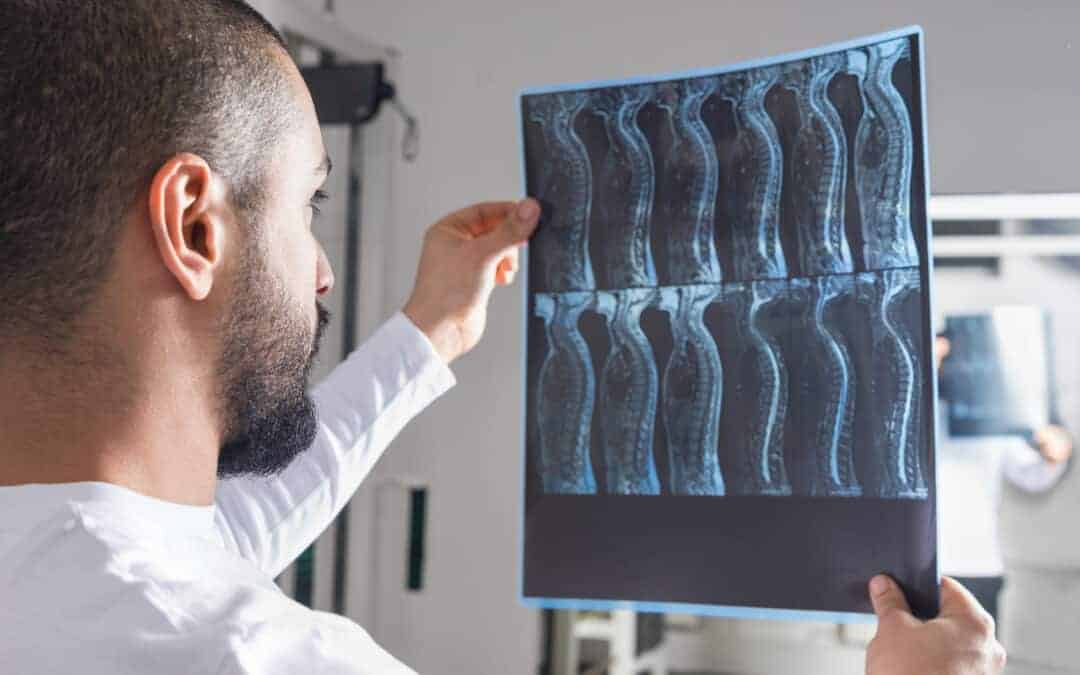
Beyond leisures, broken bones and the common concussion, more and more riders are finally picking up on the severity of what can happen aboard your mount and setting the example for the future of the sport. However, recent studies have found that spinal cord injuries occurring in horseback riders are vastly misunderstood.

In a study titled, “Traumatic Spinal Cord Injuries in Horseback Riding: A 35-Year Review,” Cindy Y. Lin, MD, Jerry Wright, MS, Tamara Bushnik, PhD, Kazuko Shem, MD “characterize the demographics, SCI patterns, and neurologic outcomes of riders with SCI’s related to horseback riding”.

The number of injuries for horseback riding were compared with other sports and activities. The results concluded, compared with diving, motorcycle riding, football, and gymnastics, horseback riding has an equal likelihood of resulting in paraplegia and tetraplegia. The most common levels of preserved neurologic function were C4-C6, T12, and L1. Spinal cord injury from horseback riding most commonly resulting in incomplete tetraplegia (41%) followed by complete paraplegia (24%). Only 4 patients required mechanical ventilation on discharge from acute inpatient rehabilitation.

After any fall in the arena requiring medical attention, both the USEF and FEI require registered sporting events to have an emergency preparedness plan. The FEI has a doctor’s pack available, which details guidelines on emergency medical personnel and injury response. FEI competitions are required to have personnel trained in emergency medical care over the duration of the competition, and a medical coverage plan that details procedures, ambulance coverage, and local hospitals with emergency trauma services. The FEI also requires that there is a dedicated medical provider, a quiet area onsite for evaluation of athletes with the Sport Concussion Assessment Tool, and a plan for acute stabilization of athletes with neurological injuries.

In the Department of Neurological Surgery out of The University of Miami School of Medicine, the research article “Pre-hospital Management of Spinal Cord Injuries” by Barth A. Green, M.D., Frank J. EislDont, M.D. and JalDes T. O’Heir discusses accident scene triage and the debate of care immediately after the accident.

“In most areas of the United States, paramedics are highly skilled in advanced life support techniques and are responsible for major trauma victims such as those with spinal cord injuries. These skills include the capability of intubation, defibrillation, intravenous medication administration, and very importantly in the case of spinal cord injury, neurological assessment.”

Additionally, after further assessment, there is much controversy regarding whether a SCI patient should be taken to the nearest less qualified hospital or transported (requiring a greater length of time), to a more highly specialized trauma center. These decisions left up to pre-hospital colleagues play an important role in the healthcare delivery system in determining the patient’s level of injury.

Those deeply rooted in the equestrian community unfortunately may not be informed down to the final statistic but are well aware of the dangers of their sport. You now will see many of our top riders sporting air vests when aboard their mounts. Leaders in this community are companies like HeLite, Free Jump and Horse Pilot. These air vests are designed for safety, comfort and discretion, but to protect the rider’s vital areas. Airvests will now cover the rider’s abdomen, neck and vertebrae, and will deploy when triggered during a crash or fall.

All of these decisions, evaluations, and research are major components in determining the most optimal outcome in any SCI. Spreading the awareness of riding safety, and encouraging the equestrian community to protect each other, is the only way to avoid becoming a part of a statistic. Taking safety seriously as an equestrian is not only the smarter choice, but the evolution to the sport. As riders adapt to the safety advancements, additional protection can only make you a better athlete. Staying safe and informed is the superpower to ride not only more confidently but to be an innovative addition to the equestrian future.